How IKS Supports NEP 2020, Outcome-Based Education, and Accreditation
Higher education in India is entering a new phase of transformation driven by the National Education Policy 2020. The policy emphasizes holistic learning, multidisciplinary education, and a stronger connection between education and India’s intellectual heritage.
One of the key academic initiatives emerging from this reform is the integration of Indian Knowledge Systems (IKS) into university curricula.
For institutions focusing on Outcome-Based Education (OBE) and accreditation under bodies such as the National Assessment and Accreditation Council (NAAC) and the National Board of Accreditation (NBA), IKS integration offers more than cultural enrichment. It strengthens curriculum relevance, enhances learning outcomes, and supports evidence-based academic quality.
This article explains what Indian Knowledge Systems are, why they matter in the NEP era, and how institutions can integrate them to strengthen accreditation and academic excellence.
What Are Indian Knowledge Systems (IKS)?
Indian Knowledge Systems refer to the structured knowledge traditions developed across centuries in the Indian subcontinent. These traditions include contributions across many disciplines, including:
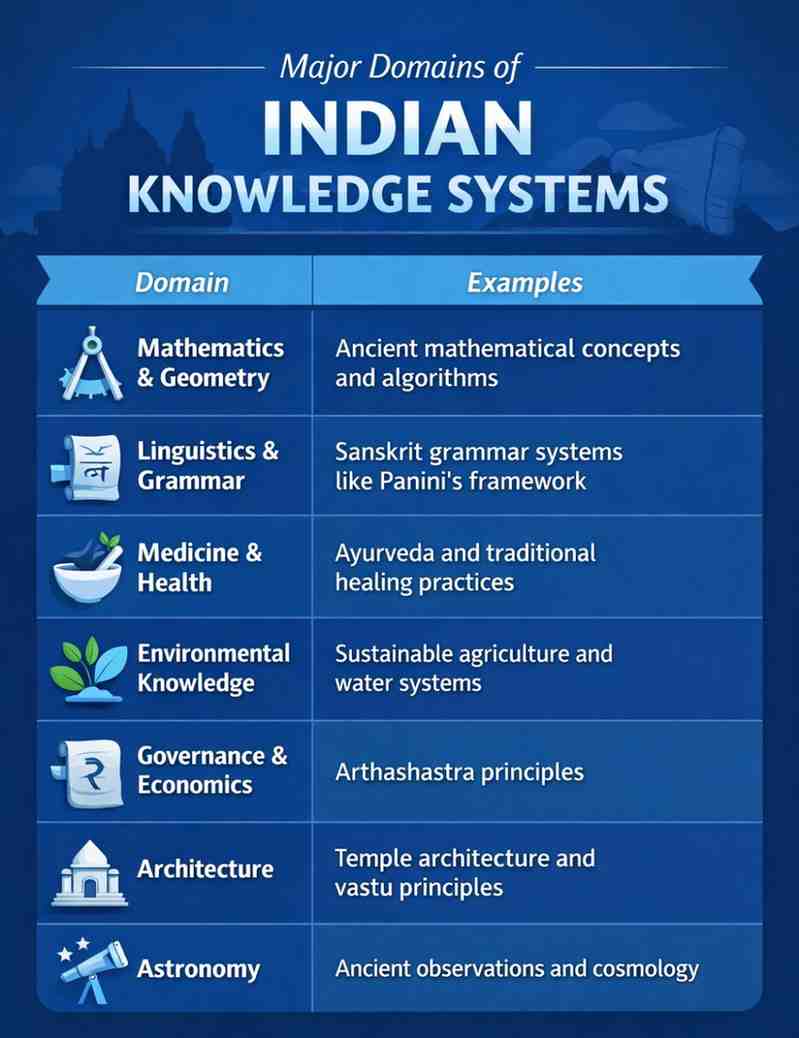
Unlike purely theoretical knowledge frameworks, traditional Indian knowledge systems often emphasized practical application, ethical reasoning, and ecological balance.Today, the goal of integrating IKS into higher education is not to replace modern scientific approaches but to study traditional knowledge critically, reinterpret it through modern research, and apply relevant insights to contemporary challenges.
Why IKS Matters in the NEP 2020 Framework
The National Education Policy 2020 encourages universities and colleges to reconnect education with India's intellectual traditions while promoting innovation and global competitiveness.
Key objectives of NEP that align with IKS include:
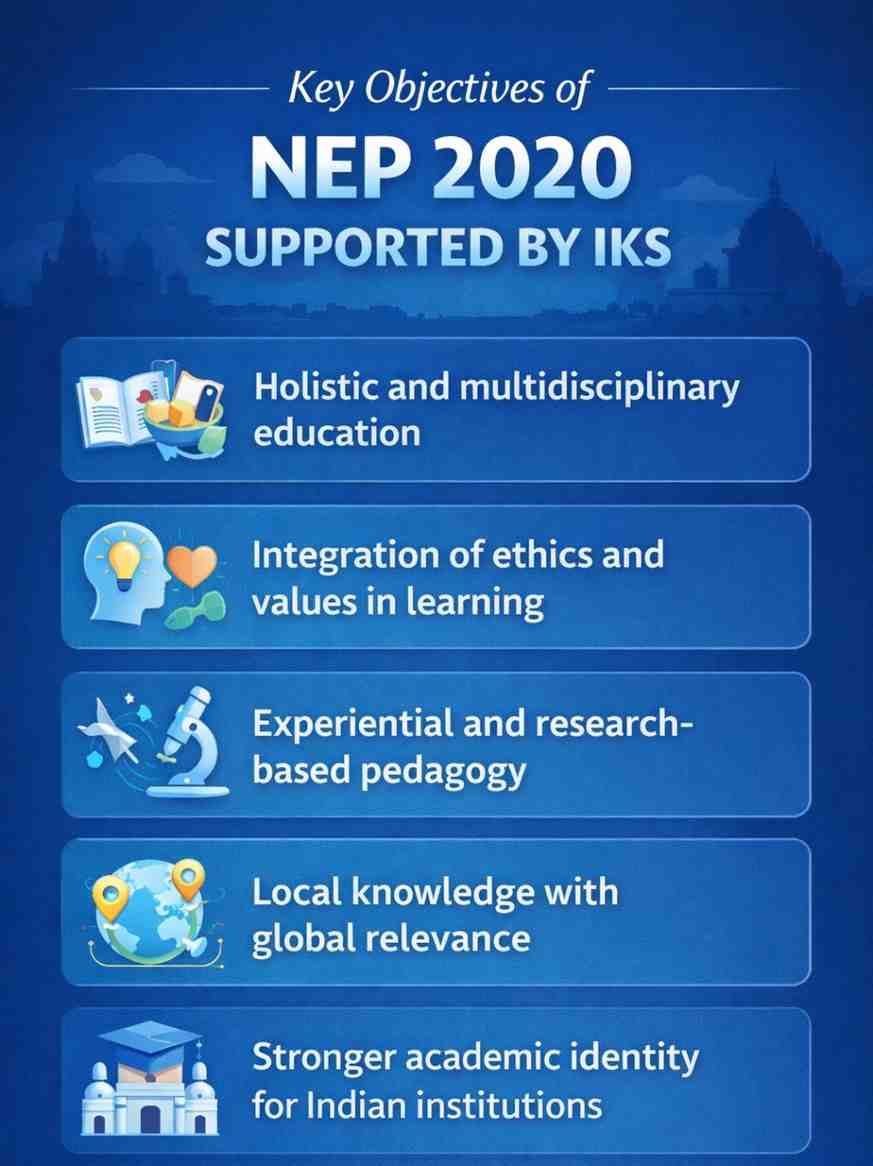
IKS provides a framework for achieving these goals by encouraging students to explore historical knowledge systems alongside modern scientific inquiry.
This integration also strengthens academic programmes by connecting learning with culture, society, and sustainability.
How IKS Supports Outcome-Based Education (OBE)
Outcome-Based Education focuses on measurable learning outcomes such as knowledge, skills, critical thinking, and ethical responsibility.
IKS contributes significantly to these learning dimensions.
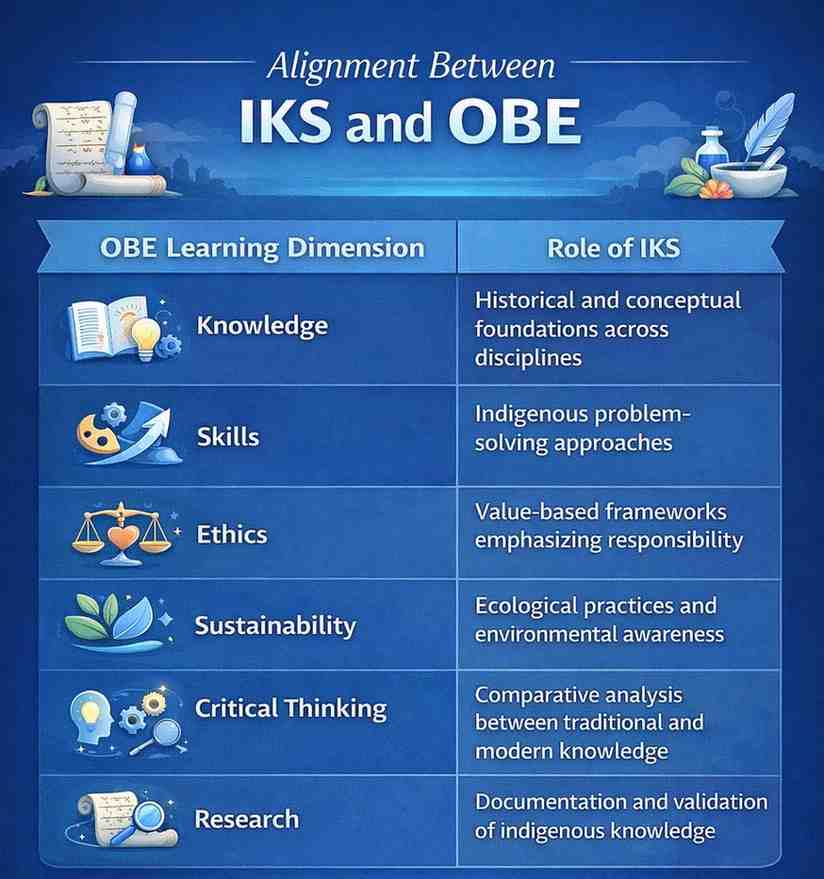
Through IKS integration, institutions can strengthen Programme Outcomes (POs), Programme Specific Outcomes (PSOs), and Course Outcomes (COs) while encouraging interdisciplinary learning.
Role of IKS in NAAC Accreditation
Institutions accredited by the National Assessment and Accreditation Council (NAAC) can integrate IKS across several evaluation criteria.
Criterion I – Curricular Aspects
IKS can be incorporated through:
- Foundation courses on Indian Knowledge Systems
- Interdisciplinary electives
- Value-added programmes
Criterion II – Teaching, Learning, and Evaluation
IKS promotes:
- Experiential learning methods
- Contextual case studies
- Field projects documenting local knowledge practices
Criterion III – Research, Innovation, and Extension
IKS creates opportunities for:
- Indigenous knowledge research projects
- Community-based documentation studies
- Interdisciplinary collaborations
Criterion VII – Institutional Values and Best Practices
IKS initiatives support:
- Environmental sustainability
- Cultural heritage preservation
- Ethical leadership development
Many institutions also document IKS initiatives as institutional best practices, strengthening their NAAC evaluation reports.
Importance of IKS in NBA-Accredited Professional Programmes
Professional programmes evaluated by the National Board of Accreditation (NBA) can integrate IKS into curriculum and projects to support graduate attributes.
IKS strengthens areas such as:
- Engineering ethics
- Environmental sustainability
- Societal impact of technology
- Multidisciplinary problem solving
- Lifelong learning perspectives
For example, engineering students may study traditional water management systems, sustainable architecture, or indigenous agricultural technologies as part of design projects and research assignments.
Practical Ways to Integrate IKS in Universities and Colleges
Institutions can adopt several practical models to integrate Indian Knowledge Systems into academic programmes.
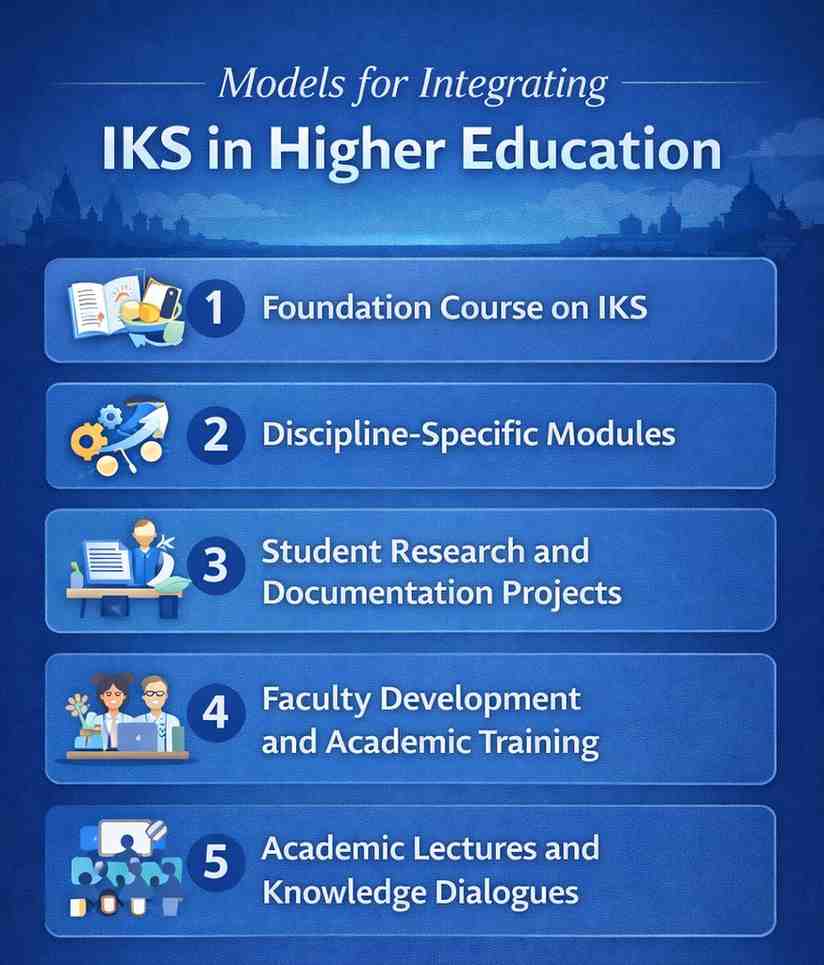
1. Foundation Course on IKS
A 1–2 credit course introducing students to major domains of Indian knowledge traditions.
2. Discipline-Specific Modules
Departments can integrate IKS concepts relevant to their academic fields.
Examples include:
- Environmental science studying traditional ecological practices
- Architecture exploring indigenous construction techniques
- Management programmes examining historical governance models
3. Student Research and Documentation Projects
Students can document local knowledge systems related to agriculture, medicine, or sustainable resource management.
4. Faculty Development and Academic Training
Faculty workshops and FDPs help teachers integrate IKS perspectives into teaching and research.
5. Academic Lectures and Knowledge Dialogues
Inviting scholars and practitioners working in IKS expands institutional engagement with traditional knowledge systems.
Documentation for Accreditation and Quality Assurance
To ensure IKS initiatives contribute effectively to accreditation, institutions should maintain proper academic documentation.
Important documentation includes:
- Clearly defined Course Outcomes (COs)
- PO–PSO mapping frameworks
- Student project reports and field studies
- Assessment and attainment records
- Research publications and seminars
- Institutional best practice reports
Such documentation demonstrates that IKS integration is academically structured, measurable, and outcome-oriented.
The Future of Indian Knowledge Systems in Higher Education
Integrating Indian Knowledge Systems represents an important step toward redefining higher education in India.
It encourages institutions to move beyond purely imported academic models and develop knowledge frameworks rooted in local intellectual traditions while engaging with global scholarship.
When implemented effectively, IKS contributes to:
- Stronger academic identity
- Holistic learning environments
- Meaningful Outcome-Based Education
- Improved accreditation outcomes
- Globally competent yet culturally grounded graduates
Ultimately, the purpose of integrating Indian Knowledge Systems is not only to preserve knowledge from the past, but also to build a future where education remains both innovative and deeply connected to intellectual heritage.
Upcoming Faculty Development Programme (FDP)
To support institutions in understanding and implementing Indian Knowledge Systems in higher education, Gauhati University is organizing a National-Level Online Faculty Development Programme on Indian Knowledge Systems (IKS) in collaboration with ipsr solutions limited.
FDP Details
| Programme | National-Level Online FDP on IKS |
| Organisers | UGC-MMTTC & IQAC, Gauhati University |
| Collaboration | ipsr solutions limited |
| Date | 18 – 24 March |
| Session Time | 07:00 PM – 09:00 PM |
| Mode | Online |
Brochure: t.ly/va7wD
Registration Link: t.ly/4E5Pu
The programme will feature academic experts and industry leaders discussing IKS integration, accreditation frameworks, and outcome-based education strategies.
Faculty members, researchers, and academic administrators are encouraged to participate.
Frequently Asked Questions (FAQ)
What are Indian Knowledge Systems in education?
Indian Knowledge Systems refer to traditional knowledge traditions in areas such as mathematics, medicine, governance, linguistics, ecology, and philosophy that are being integrated into modern academic curricula.
Why is IKS important for NEP 2020?
NEP 2020 encourages multidisciplinary learning and culturally rooted education. IKS helps institutions align with these policy objectives.
How does IKS help in NAAC accreditation?
IKS strengthens several NAAC criteria including curriculum enrichment, experiential learning, research initiatives, and institutional best practices.
Can IKS be integrated into engineering or professional programmes?
Yes. IKS concepts can be included in engineering ethics, sustainability studies, design projects, and interdisciplinary research assignments.